
Darwin's Delay: Why He Waited 20 Years to Publish 'On the Origin of Species'
Charles Darwin's journey to publish 'On the Origin of Species' in 1859 marked a significant turning point in the history of science and philosophy. This seminal work introduced the theory of evolution by natural selection, fundamentally changing our understanding of biology and the diversity of life on Earth. However, what many may not realize is that Darwin took nearly two decades to publish his groundbreaking ideas.

The Early Years: Foundations of Thought
Childhood and Education
Charles Darwin was born on February 12, 1809, in Shrewsbury, England, into a well-to-do family. His father, Robert Darwin, was a successful physician, and his mother, Susannah Wedgwood, came from a prominent family known for their pottery. Although he initially struggled in school, Darwin's curiosity and interest in the natural world flourished during his later education at the University of Edinburgh and then at Christ's College, Cambridge.
At Edinburgh, Darwin was exposed to the burgeoning field of natural history and became acquainted with various scientific thinkers. His education in natural science laid the groundwork for his future work, instilling in him a deep appreciation for observation and empirical evidence.
The Voyage of the Beagle
In 1831, Darwin embarked on a five-year voyage aboard the HMS Beagle, serving as the ship's naturalist. This journey proved pivotal, allowing him to explore diverse ecosystems, collect specimens, and make meticulous observations about the flora and fauna he encountered. He was particularly fascinated by the Galápagos Islands, where he noted variations among species of finches that would later serve as critical evidence for his theories.
The Beagle voyage provided Darwin with a wealth of data, yet he returned to England in 1836 without a clear plan for how to synthesize and communicate his findings. The next several years would involve extensive research, contemplation, and the gradual development of his theory of evolution.
The Coming of Age of Evolutionary Thought
Early Influences and Theories
Darwin was not alone in considering the origins of species; several other thinkers had laid the groundwork for evolutionary ideas. Key figures included:
Jean-Baptiste Lamarck: An early proponent of evolution, Lamarck proposed that organisms could acquire traits during their lifetime and pass them on to future generations—a concept that Darwin would later refute.
Thomas Malthus: Malthus's essays on population growth provided Darwin with insights into competition for limited resources, which became a crucial element in his theory of natural selection.
Geologists like Charles Lyell: The concept of gradual geological change influenced Darwin's thinking, as he began to appreciate the immense time scale required for evolutionary processes.
These early influences shaped Darwin’s understanding of variation and adaptation, yet he hesitated to publish his ideas, aware of the implications they bore.
The Reluctance to Publish
A Tenuous Relationship with Controversy
Darwin was acutely aware that his ideas would challenge established beliefs, particularly those rooted in religious doctrine. The notion that species could evolve over time contradicted the prevailing view of creation as expressed in the Bible. Darwin's hesitation stemmed partly from his understanding of the potential backlash he would face from the scientific community and the public.
Personal Struggles and Health Concerns
In addition to external pressures, Darwin battled personal struggles that compounded his reluctance to publish. He experienced chronic health issues throughout his life, which often left him fatigued and anxious. These health challenges made the prospect of engaging in public debates daunting.
Furthermore, Darwin's deeply contemplative nature led him to overthink his work. He meticulously gathered evidence and refined his ideas, sometimes to the point of paralysis. As he sought to ensure that his theory was robust, he became increasingly aware of the weight of responsibility resting on his shoulders.
The Influence of Family and Society
Darwin's family also played a significant role in his decision-making process. His wife, Emma Wedgwood, held strong religious beliefs and expressed concern that publishing his theory would lead to personal distress and societal upheaval. This familial influence created additional internal conflict for Darwin as he weighed his scientific integrity against the potential fallout for his loved ones.
The societal context of Victorian England further complicated matters. The era was characterized by strict social norms and a growing emphasis on empirical science. A radical shift in thought, such as that proposed by Darwin, could have far-reaching consequences for his standing within both scientific and social circles.
Events Leading to Publication
Correspondence with Alfred Russel Wallace
In the mid-1850s, Darwin's quiet contemplation was interrupted by correspondence with a young naturalist named Alfred Russel Wallace. Wallace was conducting research in the Malay Archipelago and independently arrived at a similar theory of natural selection. In 1858, he sent a manuscript outlining his ideas to Darwin, prompting immediate action from the latter.
The prospect of competition galvanized Darwin, pushing him to finally compile and publish his extensive research. The two men agreed to present their findings together at a meeting of the Linnean Society of London in July 1858. This event served as a pivotal moment, drawing attention to the concept of natural selection and forcing Darwin to confront the reality of his work.
The Final Push: Publication of 'On the Origin of Species'
With the urgency created by Wallace's findings, Darwin dedicated himself to finalizing 'On the Origin of Species.' Drawing on nearly two decades of research and data, he meticulously crafted the book, ensuring that it addressed anticipated criticisms and presented a compelling argument for evolution.
On November 24, 1859, Darwin's long-awaited work was published, receiving a mixed reception. Scientific circles were abuzz with excitement and controversy, while some religious figures vehemently opposed his ideas. Despite the backlash, the publication marked the beginning of a new era in science, setting the stage for further exploration of evolutionary theory.
The Impact of Darwin’s Work
Scientific Revolution and Acceptance
'On the Origin of Species' ultimately revolutionized the field of biology, providing a coherent explanation for the diversity of life on Earth. Darwin's theory of natural selection offered a framework for understanding how species evolve over time, shifting the scientific community's perspective on the origins of life.
In the years following its publication, Darwin's ideas sparked extensive research across various disciplines, leading to advancements in genetics, paleontology, and ecology. The emergence of the modern synthesis in the mid-20th century further integrated genetic principles with Darwinian evolution, solidifying his contributions to the scientific canon.
Philosophical Repercussions
The philosophical implications of Darwin's work extended far beyond biology. The theory of evolution forced society to reevaluate its understanding of humanity's place in the natural world. The concept of evolution challenged traditional religious views on creation, leading to intense debates over science and faith that persist to this day.
Darwin's work also encouraged the rise of secular humanism, prompting questions about the nature of life, morality, and the meaning of existence in a world shaped by natural processes rather than divine intervention.
The Legacy of Darwin’s Delay
Lessons in Scientific Caution
Darwin's two-decade-long journey illustrates the importance of caution and thoroughness in scientific inquiry. His careful approach to research highlights the necessity of building a robust body of evidence before presenting revolutionary ideas. The reluctance to act quickly allowed him to refine his theories and anticipate criticisms, ultimately strengthening his case.
The Role of Societal Context
Darwin's story serves as a reminder of the influence that societal norms and cultural contexts can have on scientific progress. His hesitation to publish reflects a broader tension between emerging scientific ideas and established beliefs, emphasizing the need for open dialogue and the consideration of varying perspectives.
Promoting Ethical Responsibility in Science
Darwin's experiences underscore the ethical responsibility scientists carry in their work. Aware of the potential consequences of his theories, Darwin grappled with the implications of revealing his ideas. His story illustrates the importance of considering the societal impact of scientific advancements and the necessity for responsible communication.
Conclusion
Charles Darwin's decision to delay the publication of 'On the Origin of Species' was not a mere lapse in action; it was a deeply considered response to a complex interplay of scientific, personal, and societal factors. His eventual release of the book catalyzed a scientific revolution and reshaped humanity's understanding of the natural world.
Darwin's journey, marked by introspection and careful deliberation, emphasizes the importance of patience, thoroughness, and ethical responsibility in scientific pursuits. As we continue to navigate the frontiers of knowledge, the lessons learned from Darwin's delay remind us that meaningful progress often requires contemplation and courage in the face of uncertainty.
-
 History and Philosophy
The Forgotten Women of ENIAC: Programming Pioneers Written Out of Tech History
In the annals of computer history, the story often revolves around groundbreaking innovations, visionary engineers, and the machines that changed the world. However, a significant chapter remains largely untold: the critical contributions of women who played vital roles in the development of early computing systems, particularly the Electronic Numerical Integrator and Computer (ENIAC). Conceived in the 1940s, ENIAC was the first general-purpose electronic computer, and its programming was primarily carried out by a group of talented women who have largely been overlooked in the narrative of technological advancement.
-
 History and Philosophy
Alchemy to Chemistry: When Did Pseudoscience Become Real Science?
The transformation of alchemy into modern chemistry is one of the most fascinating stories in the history of science. Alchemy, often romanticized as the quest to turn base metals into gold and discover the elixir of life, is frequently dismissed as a pseudoscience. However, underlying its mystical and philosophical roots were principles that would pave the way for the rigorous discipline of chemistry.
-
 History and Philosophy
Galileo's Telescope: How One Instrument Sparked the Scientific Revolution
The dawn of the 17th century marked a pivotal moment in human history—the emergence of the Scientific Revolution. This transformative period reshaped humanity's understanding of the cosmos, laying the groundwork for modern science. Among the key figures of this revolution was Galileo Galilei, an Italian polymath whose use of the telescope fundamentally changed our perception of the universe. Through his groundbreaking observations, Galileo challenged long-standing astronomical theories, paving the way for a new empirical approach to science.
-
 History and Philosophy
Marie Curie's Notebooks: Still Radioactive a Century Later – The Price of Discovery
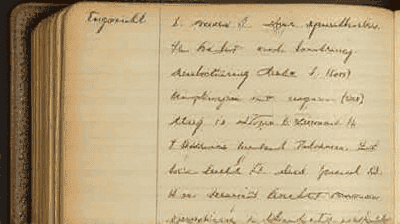
Marie Curie is often celebrated as one of the most notable scientific pioneers of the 20th century. Best known for her groundbreaking research on radioactivity—a term she coined—Curie's work laid the foundation for advancements that would transform medicine, energy production, and our understanding of atomic science. However, her legacy is profoundly intertwined with the unforeseen consequences of her discoveries. Over a century after she conducted her research, her notebooks remain dangerously radioactive, serving as a sobering reminder of the cost of scientific discovery.
-
 History and Philosophy
The Rosetta Stone of Physics: How Newton's Principia Mathematica Decoded the Universe
When we think of pivotal moments in the history of science, few can rival the impact of Isaac Newton's 'Philosophiæ Naturalis Principia Mathematica,' commonly known as the Principia. Published in 1687, this groundbreaking work laid the foundations for classical mechanics and forever altered humanity's understanding of the natural world. Often likened to the Rosetta Stone for its role in deciphering the complexities of the universe, Newton's Principia provided a systematic framework for explaining the motion of celestial bodies and terrestrial objects.
-
 History and Philosophy
The Manhattan Project's Moral Dilemma: Science, War, and the Birth of the Atomic Age
The Manhattan Project remains one of the most significant and controversial scientific undertakings in history. This unprecedented effort during World War II led to the development of the atomic bomb, marking a profound shift in global power dynamics and ethical considerations surrounding science and technology. As scientists and military leaders raced to create a weapon capable of ending the war, they faced moral dilemmas that challenged their beliefs and the very nature of scientific pursuit.
Hot Posts
-

Best Practices for Disposing of Pet Waste: Keeping Your Home and Community Clean
-

Insurance Premiums Explained: Factors that Affect Your Coverage Cost
-

The Environmental Impact of Food Waste: Why Proper Disposal Matters
-

Top 10 Foods You Should Never Dispose of in Your Garbage Disposal
-

Types of Insurance: Exploring Coverage Options for Different Needs
-

Why Subscription Boxes Are the Future of Retail